Agustus 24, 2025
|13 menit bacaan

Dalam milidetik yang dibutuhkan sebuah halaman web untuk memuat, keputusan berisiko tinggi dibuat yang bisa menentukan reputasi merek Anda. Ketika iklan B2B Anda yang dirancang dengan teliti muncul, akankah ia berdiri bangga di samping analisis industri kredibel dalam sebuah majalah perdagangan? Atau akan muncul di samping video deepfake yang canggih dari seorang CEO yang menyebarkan misinformasi pasar, tepat saat prospek kunci sedang melakukan due diligence terhadap perusahaan Anda? Satu klik, satu penempatan buruk, dan sebuah kesepakatan bernilai jutaan dolar bisa terancam sebelum tim penjualan Anda mengetahuinya. Inilah tantangan inti yang tidak bisa dihindari dari periklanan digital modern. Kecerdasan Buatan (AI) telah memberi pemasar B2B kekuatan luar biasa untuk penargetan yang tepat dan efisiensi kampanye. Namun, pedang bermata dua ini juga memperkenalkan ancaman-ancaman baru yang kompleks terhadap keamanan merek Anda. Menavigasi lanskap ini menuntut lebih dari sekadar alat pertahanan—ia menuntut strategi proaktif dan cerdas untuk melindungi aset paling berharga Anda: integritas merek Anda. Apa yang akan Anda pelajari dalam panduan ini
Not long ago, brand safety was a straightforward concept. Marketers relied on whitelists of trusted websites and keyword blocklists to steer clear of universally unsafe categories like violence, adult content, or hate speech. But this approach had its flaws. A brand might block the word “crash” to avoid negative associations, only to miss out on opportunities to appear alongside stories like “crashing the market with innovative technology.” It was a blunt instrument: manageable, but inefficient. Then came programmatic advertising. The automation of ad buying across millions of websites brought immense efficiency—but at a cost. Marketers lost visibility and control, as trillions of ad auctions now happen daily in a “programmatic black box.” Manual oversight became impossible. This shift from direct placements to algorithm-driven delivery created a new, complex brand safety challenge: protecting brand integrity in an unpredictable and opaque digital ecosystem. 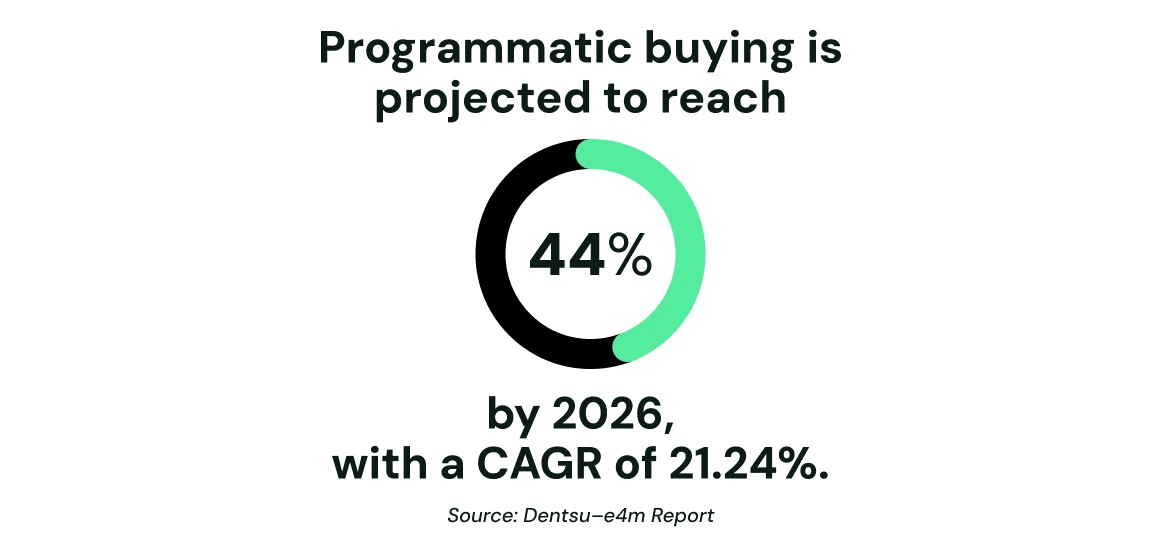 According to the Dentsu-e4m report, programmatic buying accounted for 42% of digital ad spend in 2024—a 21% increase over the previous year. This growth is set to continue, with programmatic expected to claim 44% of the market by 2026, growing at a CAGR of 21.24%. With such a significant portion of ad spend now mediated by algorithms, brands are increasingly surrendering control over where their ads appear. In this reality, a reactive approach to brand safety is no longer enough. A strategic, AI-conscious model is essential to maintain brand integrity in a fast-evolving, automated ecosystem.
The modern landscape demands a shift from basic brand safety to strategic brand suitability. For B2B, where reputation and trust are paramount to long sales cycles and high-value deals, this is non-negotiable. It’s no longer enough just to avoid inappropriate content; the goal is to find environments that reinforce expertise and credibility proactively. Using advanced AI to analyze context and sentiment, leaders can ensure their brand appears alongside positive industry analysis, not reports of corporate failure. This transforms brand safety from a defensive cost center into a performance driver, maximizing ROI by ensuring marketing investments build trust with high-value accounts.
For global B2B companies, brand safety impacts investor confidence, partner relationships, and client trust. An ad appearing next to false financial news or polarizing content can jeopardize long-term deals and market perception. Modern brand safety demands AI-powered tools that assess tone, emotion, and values alignment, not just content classification. It requires integration across marketing, legal, and compliance teams to enforce governance at every touchpoint. For enterprise marketers, the question is no longer “How do we avoid bad content?” but “How do we align with the right content, at the right time, in the right context?” In a crowded, volatile media landscape, brand safety is no longer optional. It’s a differentiator—and a prerequisite for trust.
The B2B world is built on expertise and trust. AI-generated content, especially deepfakes, directly attacks this foundation. Imagine a deepfake video of a respected industry analyst making false negative claims about your market, with your company’s ad for a related solution appearing right next to it. That accidental association is instantly damaging and can be screen-captured and shared by competitors. This risk extends beyond video to include AI-generated “expert” blogs that promote flawed data or fake financial reports designed to manipulate market perceptions. The threat is so significant that the United Nations has called for stronger global measures to counter deepfake content before it erodes public and corporate trust (Reuters).
AI algorithms are powerful, but they often lack true human-like contextual understanding. They match keywords, not intent. This leads to jarring placements that can harm your reputation. Consider an advertisement for your cloud security software appearing next to a major news story detailing a catastrophic corporate data breach. While the keywords match, the context makes your brand appear tone-deaf, incompetent, or even predatory, undermining your solution’s credibility at a critical moment.


Dapatkan laporan dan wawasan baru dari KKBC melalui email.
 US
US 

 US
US 